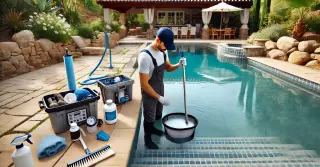
Pool Chemical Balance Barnstable County MA

Ensuring the right chemical balance is crucial for a safe and healthy swimming environment. Balanced chemicals inhibit algae and bacteria, keep the water clear and clean, and protect the pool's surface and equipment.
- Balancing pH Levels: Your pool's pH level reflects its acidity or alkalinity. Optimal pH levels range from 7.2 to 7.6. Acidic water from low pH can irritate skin and corrode equipment. If the pH is too high, the water becomes alkaline, leading to cloudy water and scaling on the pool surfaces. Frequent pH testing and adjustments is crucial for comfort and safety.
- Keeping Chlorine Balanced: Chlorine is essential for pool hygiene, as it kills bacteria, algae, and other harmful microorganisms. The ideal chlorine level should be between 1-3 ppm (parts per million). Low chlorine levels cause unsanitary water, with bacteria and algae proliferating. Too much chlorine can cause skin and eye irritation and produce a strong chlorine odor. Regularly testing and adjusting chlorine levels ensures effective sanitation and swimmer comfort.
Managing Total AlkalinityTotal alkalinity is a crucial element of pool chemistry. Alkalinity acts as a buffer for pH levels, helping to prevent drastic changes in pH. The optimal total alkalinity range is 80-120 ppm.
- Stabilizing pH Levels: Correct alkalinity levels ensure stable pH, preventing rapid changes that can cause skin irritation and damage to pool surfaces. Low alkalinity causes pH levels to fluctuate, making consistent balance difficult. High alkalinity causes cloudy water and scaling. Consistently monitoring and adjusting alkalinity levels is essential for maintaining a stable and balanced pool.
- Calcium Hardness Control: Calcium hardness indicates the calcium level in pool water. Proper calcium hardness levels range from 200 to 400 ppm. If calcium levels are too low, the water becomes corrosive, damaging pool surfaces and equipment. High calcium levels lead to scaling and cloudy water. Frequent calcium hardness testing and adjustments is important for protecting your pool and ensuring clear water.
Using Pool Chemicals SafelyProper handling and storage of pool chemicals is crucial for safety and efficiency. Keep chemicals in a cool, dry location, away from direct sunlight, children, and pets. Adhere to manufacturer guidelines for proper dosing and application.
- Accurate Chemical Measurement and Mixing: Precise measurement of pool chemicals is crucial for maintaining balance. Inaccurate dosing can disrupt the chemical balance and affect water quality. Always use a clean, dry measuring tool and never mix chemicals directly with each other. If needed, mix chemicals in water as per instructions.
- Awareness of Chemical Reactions: Certain chemicals can react dangerously if mixed. Never mix chlorine with acid, for example. Being aware of these interactions prevents accidents and ensures safe handling. Store chemicals apart and handle each carefully to prevent harmful reactions.
Keeping your pool's chemical balance is vital for a safe, clean, and pleasant swimming experience. By regularly testing and adjusting pH, chlorine, alkalinity, and calcium levels, you maintain optimal water conditions.
Safe use and storage of pool chemicals further ensure the health and safety of your pool and its users.